



Fire alarm testing
Keep your business compliant and inspection-ready with professional fire alarm testing from Acorn. Our certified engineers help facilities managers across the UK meet their fire safety duties, backed by 30 years of experience and digital reporting tools. Book yours now to stay safe and compliant.
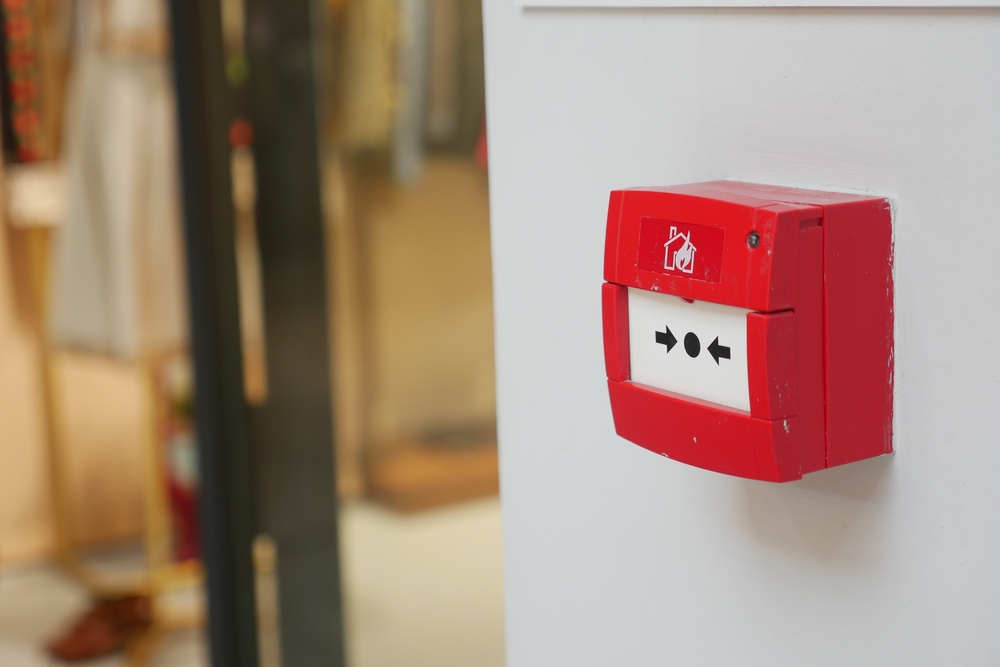
What is fire alarm testing?
Fire alarm testing involves checking your fire detection and alarm system to see if it:
- Activates correctly
- Communicates faults clearly
- Works in line with BS 5839 recommendations
In commercial buildings, regular fire alarm system testing is mandatory. It protects occupants and shows that your fire safety responsibilities are being properly managed. Professional fire alarm testing can also identify faults early, reduce the risk of system failure, and provide the records needed for inspections. It includes:
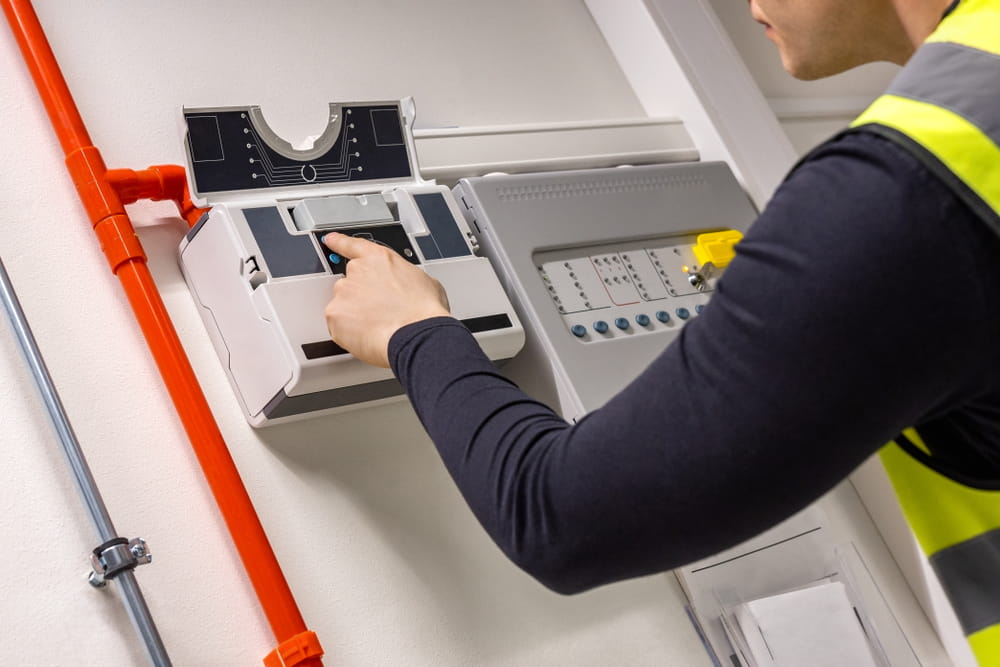
- Manual call point testing: To check that break glass units activate the alarm correctly across the building without delay. It confirms that the signal is sent, so people can raise the alarm when needed.
- Detector testing: This confirms that smoke and heat detectors respond correctly to fire indicators across the building. These checks also help to spot things that could stop the detector working as it should, like poor positioning or faults in the device.
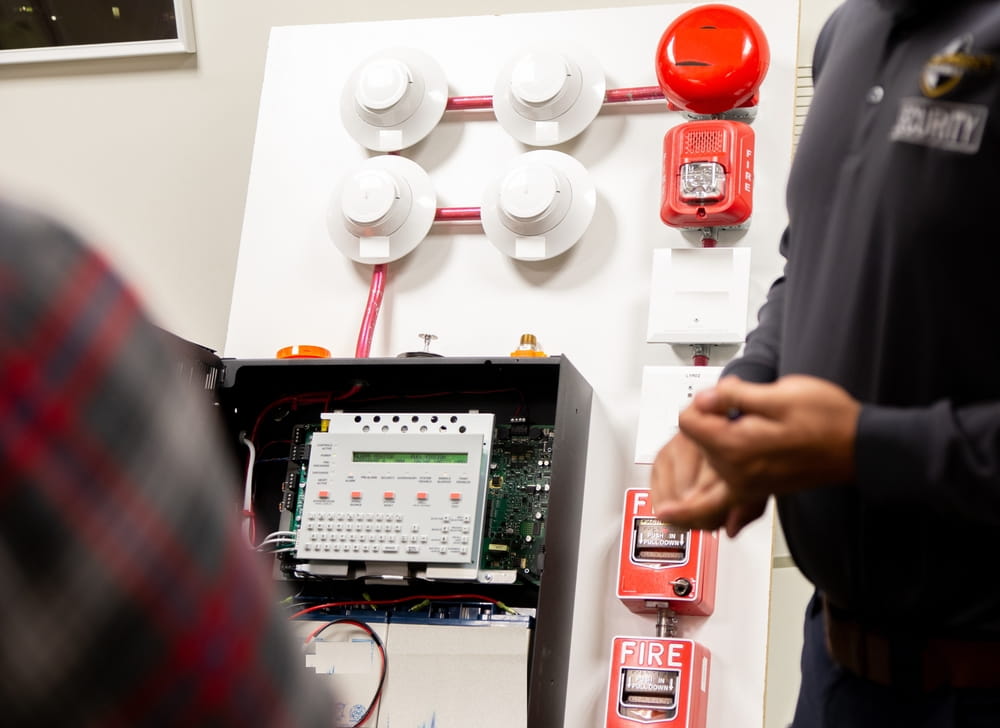
- Control panel checks: This makes sure the alarm system is working correctly, including the control panel, backup battery, and communications. They also help us find faults, disabled zones, and power supply problems that could affect system performance.
At Acorn, our certified engineers carry out commercial fire alarm testing across the UK. With clear digital reporting via ServiceTracker and long-term aftercare, you can stay compliant with strict UK fire regulations.

Why is regular fire alarm testing so important?
Regular fire alarm testing means you can be sure your system responds correctly in an emergency. It also provides clear evidence that your building is being managed responsibly.
For commercial sites, routine fire alarm system testing keeps you compliant under UK fire safety regulations, such as BS 5839. For facilities managers, compliance officers, and property managers, regular fire alarm testing is important for:
- Protecting staff, visitors, tenants, or other occupants
- Avoiding disruption (e.g. false alarms, unnecessary engineer call-outs)
- Providing the records needed for inspections and audits
Our accreditations



What is our fire alarm testing process?
Our fire alarm testing service checks system performance, finds faults, and provides fire alarm compliance records.
From initial inspection to final reporting, our simple 3-step process makes fire alarm system testing easy to manage.
Step 1: Full system inspection
We begin by reviewing your system’s layout, condition, and components to understand its setup and find any obvious issues.
Step 2: Test & diagnose any faults
Our fire alarm engineers test the detectors, manual call points, and alarm response to confirm the system works when triggered.
Step 3: Get detailed reports & guidance
Once testing is done, get clear digital records on findings and faults, and receive all relevant documentation needed for audits.
Book your fire alarm test today
As well as nationwide fire alarm system testing, we help with planned fire alarm maintenance, emergency call-outs, and emergency light testing. For the full fire safety service at affordable rates, call 0161 483 7112 or send us a message, and we’ll get back to you.

Who needs fire alarm testing?
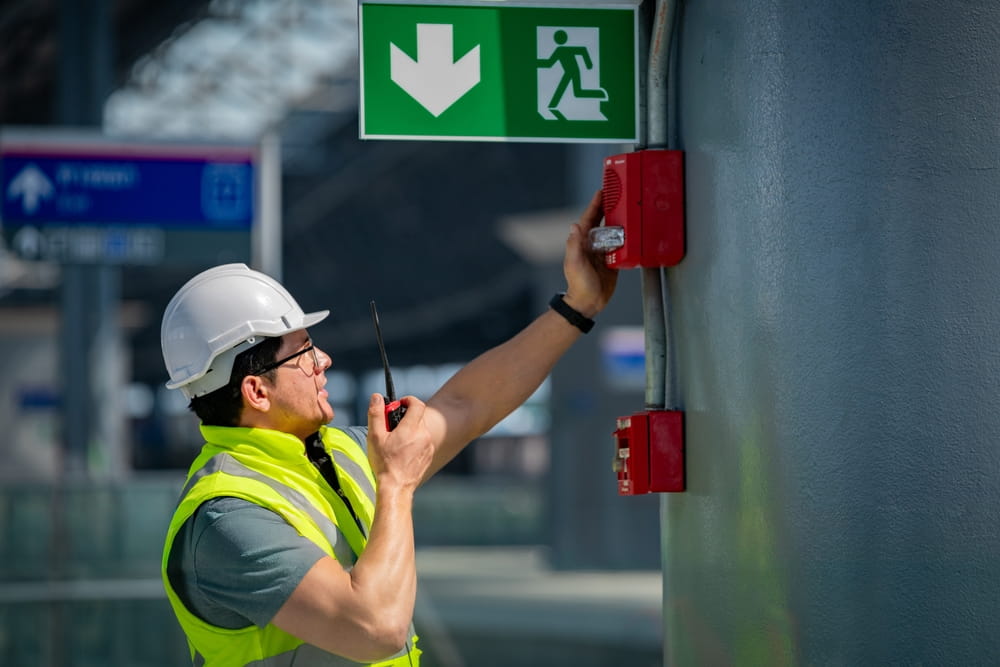
Any commercial building with a fire alarm system needs regular testing, from offices to manufacturing sites.
- Offices and commercial buildings need fire alarm testing to protect staff across busy working environments.
- Schools and educational facilities need fire alarm testing to protect pupils, staff, and visitors while reducing disruption to teaching.
- Hotels and hospitality venues depend on fire alarm testing to safeguard guests and maintain high safety standards.
- Industrial and manufacturing sites need more extensive fire alarm testing due to larger layouts and higher-risk working conditions.

How often should fire alarm systems be tested?
How often a fire alarm system should be tested depends on the site, but there are some general schedules that BS 5839 regulations suggest:
- Weekly user testing to record activation checks in your building’s log book.
- 6-monthly engineer inspections to check system conditions, faults, power supplies, and device performance.
- Annual full system coverage to make sure the whole system has been properly inspected and tested.
What fire alarm regulations should I be following?
Commercial sites in the UK should follow the fire safety legislation most relevant to their nation and manage their alarm system in line with BS 5839-1.
- In England and Wales, the main legal framework is the Regulatory Reform (Fire Safety) Order 2005.
- In Scotland, duties sit under Part 3 of the Fire Act 2005 and the Fire Safety Regulations 2006.
- In Northern Ireland, the relevant framework is the Fire and Rescue Services Order 2006 and the Fire Safety Regulations 2010.
Why choose Acorn for fire alarm testing?

Qualified engineers you can rely on
Our in-house engineers carry out fire alarm testing with minimal disruption to your day-to-day operations.

30+ years of operational experience
With decades of expertise behind us, businesses across the country can trust us to help them protect occupants and stay compliant.

Audit-ready reports when you need them
Your fire alarm testing records and documentation are stored digitally via ServiceTracker, giving you clear evidence for inspections.

Fast, nationwide support
We support UK businesses with fire alarm testing, emergency callouts, and ongoing maintenance so you can address any compliance needs or concerns.
What are our industry accreditations?
When you choose Acorn, you work with a reliable partner you can count on to help meet your legal responsibilities:
-

CHAS-recognised & accredited
Demonstrates our commitment to compliant fire alarm testing services, with robust health and safety standards, clear risk controls, and contractor competence on site.
-

SafeContractor-accredited & certified
Highlights that our working practices meet strict requirements for health and safety, environmental management, and workforce welfare.
-

Safety Schemes in Procurement (SSIP)
Confirms our health and safety arrangements meet compliance criteria expected by public and private sector clients.

From our clients

N
"I couldn't recommend Acorn highly enough, I've used them for over 3 years on my portfolio. Nothing is to big or to small, reporting is excellent and I've had operatives onsite in less than an hour when required. Acorn are my go to for pest control, jetwashing, tree services and biological clean up. They really go the extra mile whenever needed!"
Nathan Markey

K
"I had a great experience with Acorn Environment Services. From the first call to the completed service, the team was professional, knowledgeable, and friendly. They took the time to explain the issue, walked me through the treatment plan, and answered all my questions. The service was prompt, thorough, and effective—I noticed a huge improvement right away"
Katie Markey

Fire alarm testing FAQS
How often should fire alarms be tested?
Is fire alarm testing a legal requirement?
What happens during a fire alarm test?
Who is responsible for fire alarm testing?
How long does a fire alarm test take?
Book your fire alarm test now
Get in touch today to arrange professional fire alarm testing tailored to your site and schedule.
With certified engineers, responsive nationwide support, and audit-ready reporting through ServiceTracker, we help businesses keep their fire alarm compliance easy to evidence.
"*" indicates required fields