



Ant pest control
If you have spotted ants marching through your kitchen, nesting in your garden or appearing in large numbers inside your property, you need fast and effective ant control.
Acorn Environment Services provides professional ant pest control to homes and businesses across Manchester, Lancashire, Yorkshire and the wider North West of England.
With over 30 years of experience and full membership of the National Pest Technicians Association, our expert team will find the source of your ant problem, eliminate the infestation and put measures in place to stop them returning.
Rated 4.7 ⭐| 200+ active clients across North West & Yorkshire
What is ant pest control?
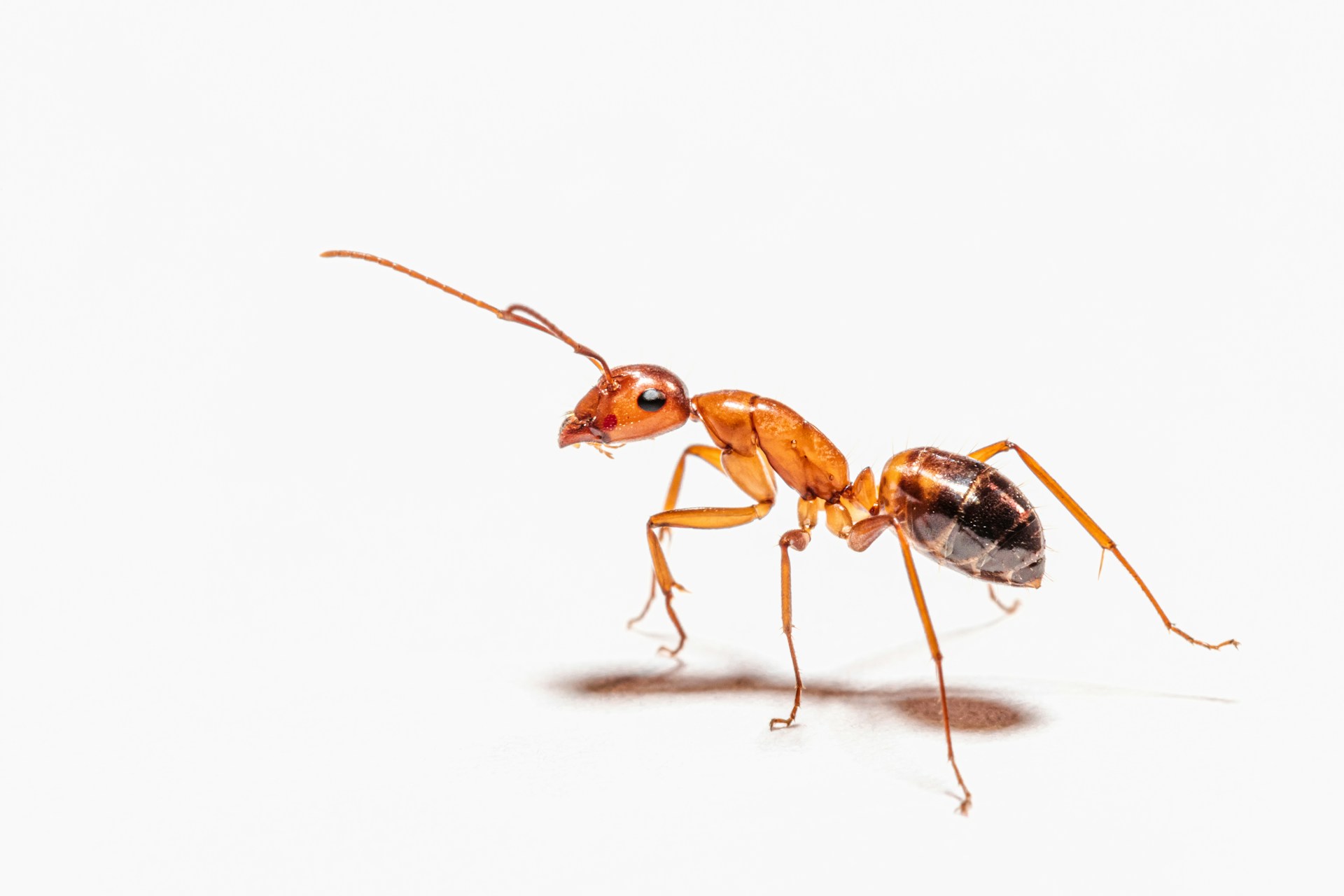
Ant pest control is the process of identifying, treating and preventing ant infestations in and around your property. While a few ants in the garden are usually harmless, a full ant infestation inside a home or business can quickly become a serious problem.
Ants are persistent insects. They follow invisible chemical trails to food sources, can nest inside walls and beneath flooring, and a single colony can contain hundreds of thousands of workers. Without professional treatment, ant infestations rarely resolve on their own.
At Acorn, our pest control specialists carry out a thorough inspection of your property, locate active nests and trails, and apply targeted treatments that deal with the infestation at its source rather than just the ants visible on the surface.

Common types of ants found in UK properties
Black Garden Ants
The black garden ant (Lasius niger) is the most common ant species found in UK homes. They are most active between April and September and often enter kitchens, bathrooms and storage areas in search of food, creating clear foraging trails and becoming a serious nuisance.
Pharaoh Ants
Pharaoh ants are small, pale yellow ants often found in heated UK buildings such as hospitals, care homes, restaurants and food production sites. They can spread bacteria, including Salmonella and Staphylococcus, and usually need specialist baiting rather than standard spray treatments.
Roger’s Ants
Roger’s ants are an introduced species occasionally found in heated buildings across the North of England. They are frequently confused with pharaoh ants and similarly challenging to eliminate without professional expertise. Improper treatment can split the colony, spreading it further through a building and worsening the infestation.
Signs you have an ant infestation
Recognising the early signs of an ant infestation allows you to act before the problem escalates. Here is what to look out for.
Large numbers of live ants
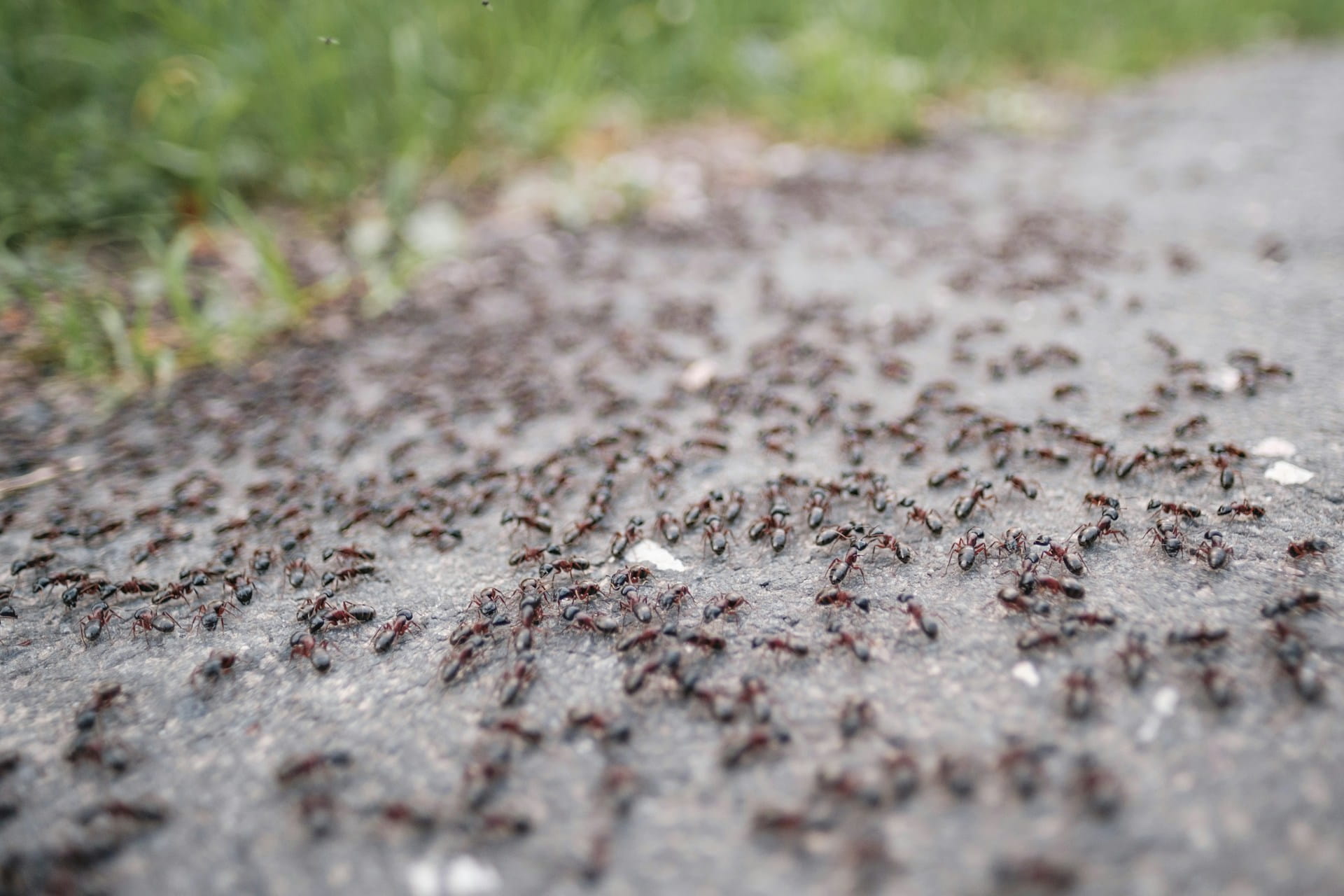
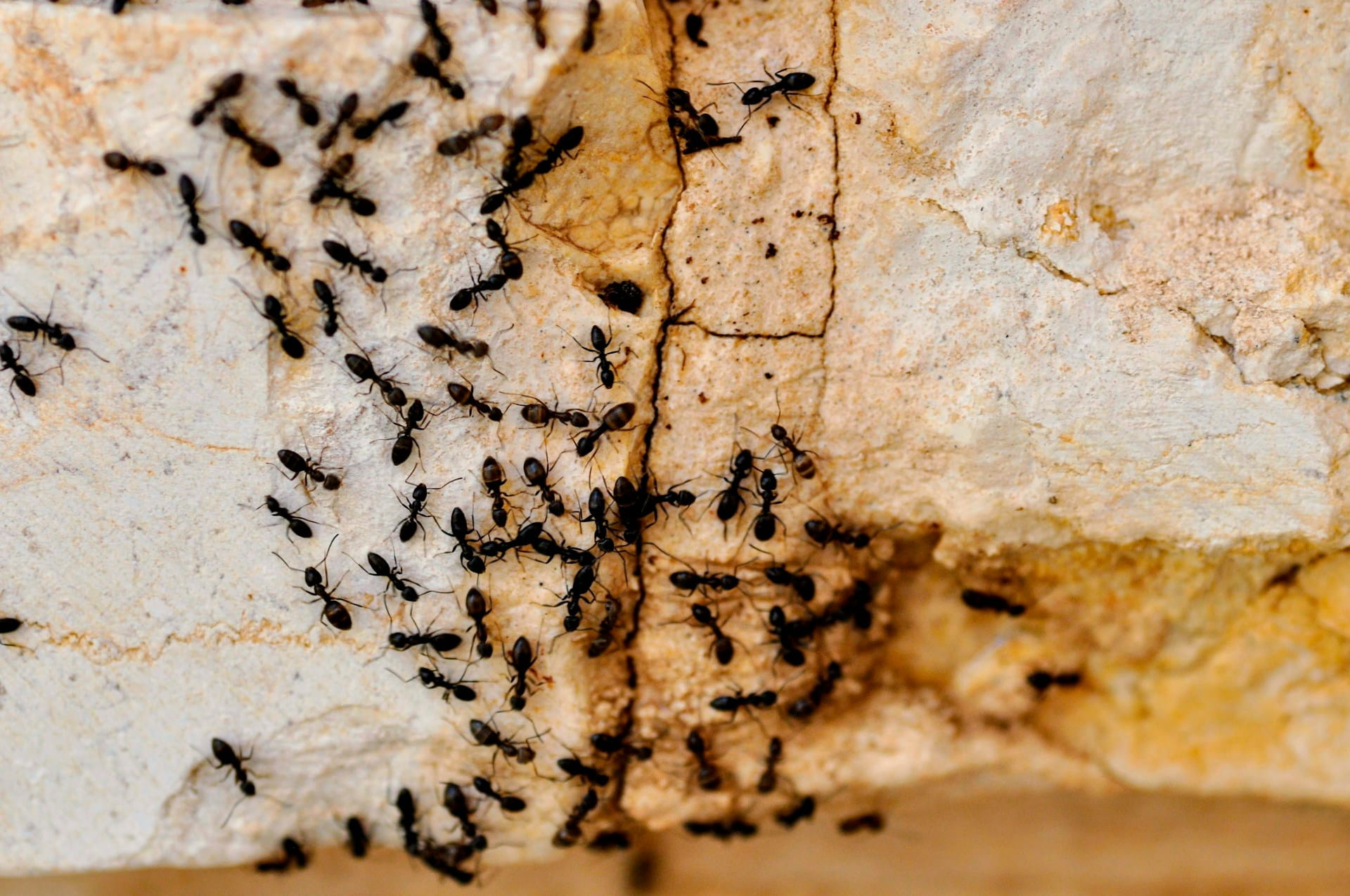
Seeing a trail of ants moving in an organised line, particularly in your kitchen, bathroom or near food sources, is a strong indicator of an active infestation. If you are seeing large numbers of ants regularly rather than occasional stragglers, the colony is likely well established nearby.
Ant pathways through your property
Many ant species lay down invisible pheromone trails between their nest and a food source. You may notice ants following a consistent route along skirting boards, behind appliances or across worktops. These trails indicate that ants have established regular access routes into your home or workplace.
Nest sites and soil mounds
Small mounds of fine soil or debris near the base of exterior walls, in garden borders or between paving slabs are common indicators of nesting activity. Some species nest inside walls or beneath flooring, making them harder to locate without a professional inspection.
Flying ants emerging from inside
Seeing large numbers of winged ants emerging from within your property, rather than from the garden, is a strong sign that a mature colony has established itself inside the building. Flying ants are reproductive males and queens preparing to leave and start new colonies.
Contaminated food and packaging
Finding ants inside food packaging, around pet food or near unsealed containers suggests an established foraging route into your property. Food contamination by ants is a particular concern in commercial food businesses where hygiene standards are subject to inspection.
Why choose Acorn for ant pest control?

Accredited, insured and NPTA-registered
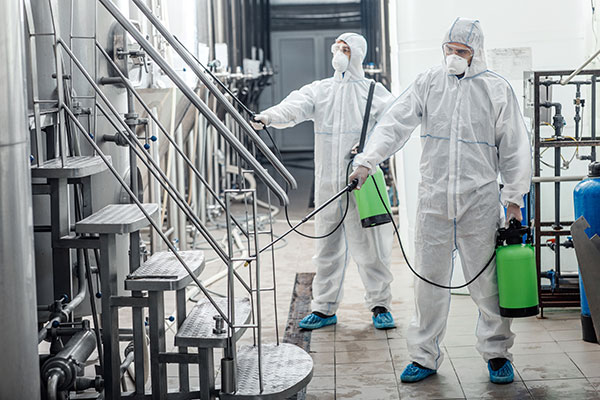
Acorn is an accredited member of the National Pest Technicians Association. And every technician is fully insured to work safely across homes, businesses and regulated premises. For commercial clients, our accreditation documentation is available on request.

Over 30 years of pest control experience
We’ve provided professional pest control services since 1990, successfully treating ant infestations in every type of property across the North West – from homes and commercial kitchens to warehouses, schools and healthcare facilities.

Fast response times
We understand that an ant problem needs to be fixed quickly and can arrange a site visit within 24 to 48 hours. For urgent commercial cases involving food businesses, healthcare settings or food preparation, we prioritise the fastest possible response.

Ant pest control for homes and commercial premises
We support homeowners, restaurants, food manufacturers, care homes, schools and more with one-off and ongoing ant treatments. This includes a written report for environmental health officers, food hygiene inspectors and insurance providers.
View our ant control accreditations

Our ant pest control treatment process
At Acorn Environment Services, we do not believe in a one-size-fits-all approach. Every ant infestation is different, which is why we follow a structured process designed to identify the species, locate the source and apply the most effective treatment available.
Step 1: Survey and species identification
A qualified pest control technician will visit your property to carry out a thorough inspection. We will identify the ant species, locate active trails and nest sites, and assess the full extent of the infestation. This stage is critical because different species require different treatment methods, and an incorrect treatment can make certain infestations significantly worse.
Step 2: Targeted treatment programme
Based on our findings, we apply a targeted ant treatment programme using the most suitable method for the species, infestation level and property type. This may include residual insecticide, insecticidal dust, gel bait or perimeter barrier treatments. For pharaoh ants and other fragmentation-risk species, we use specialist baiting to reach the queen and colony without disturbing the nest or causing splitting.
Step 3: Written report and prevention advice
After every treatment, we will provide a full written report detailing what was found, what was used and what further action is recommended. We will also give you guidance on preventing ants from returning, including advice on sealing entry points, food storage, waste management and garden maintenance. Follow-up visits are available if required to confirm treatment success or apply additional measures.
Book your free ant pest control survey
If ants are causing mess, damage or disruption, our NPTA-accredited ant pest control team can help. We’ll assess ant activity, recommend the right approach for your building and risk areas, and agree next steps to keep them away long-term.

Why DIY ant control rarely works
Supermarket ant killers and over-the-counter products kill the ants you can see but almost never deal with the nest. Worker ants represent only a small fraction of a colony. The queen, who can produce thousands of eggs per day, will remain deep inside the nest, unaffected by surface treatments.
Without eliminating the queen and the colony structure, the infestation will return within weeks. Professional pest controllers have access to regulated products and application techniques that are not available to the public. They also have expert knowledge on ant species and how to apply the correct treatment effectively.
Attempting to treat a pharaoh ant infestation with off-the-shelf sprays is a common mistake. The chemical disruption causes the colony to split and relocate, spreading the problem to new areas of the building.
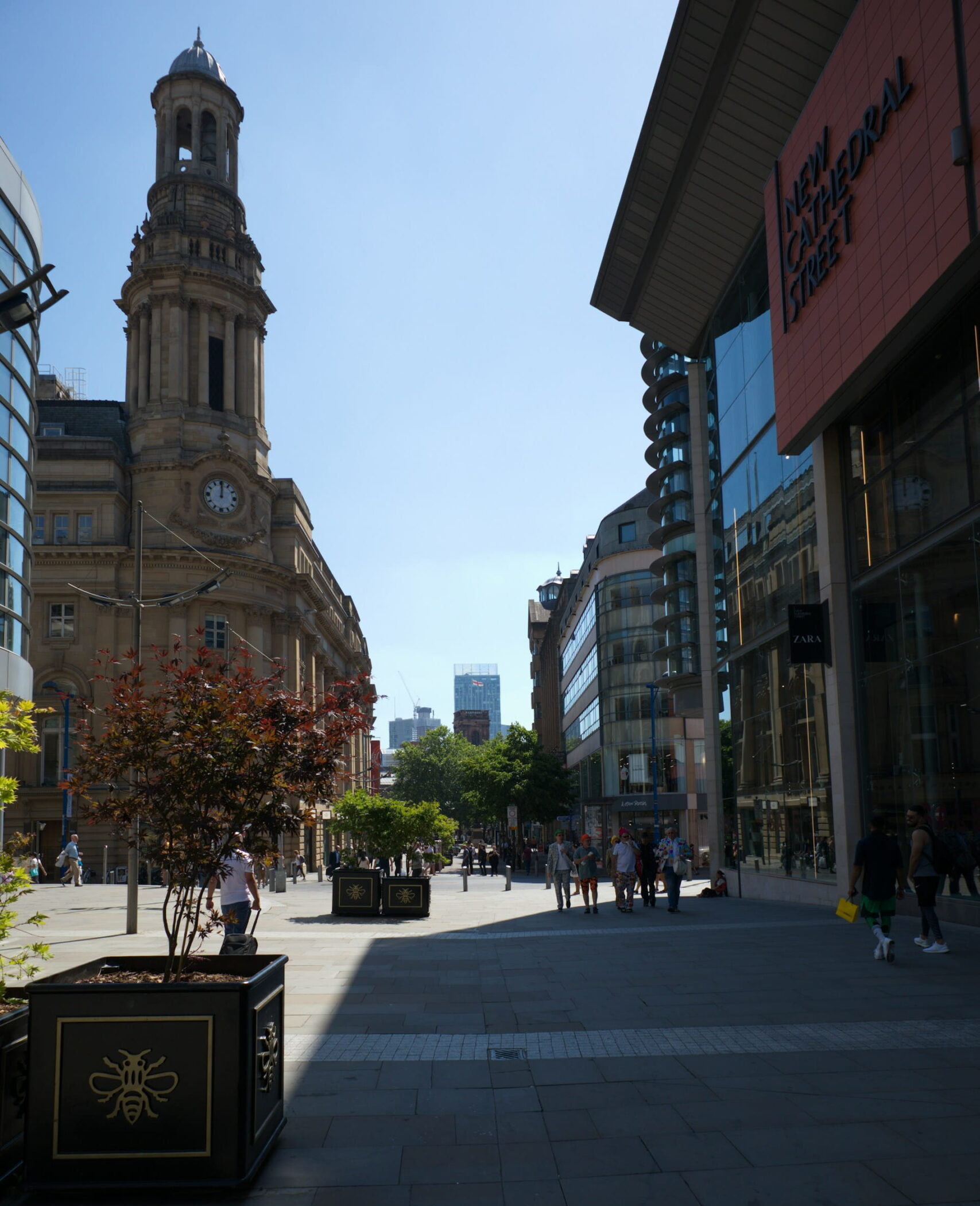
Ant pest control across the North West and Yorkshire
Our ant control services are available across a wide area, including:
- Manchester and Greater Manchester
- Liverpool and Merseyside
- Leeds and West Yorkshire
- Sheffield and South Yorkshire
- Blackburn and East Lancashire
- Burnley and the Ribble Valley
- Warrington and Cheshire
- Southport and the Sefton Coast
- Bolton, Wigan and surrounding areas
- Across Yorkshire and into the East Midlands
If you are unsure whether we cover your location, call our team and we will confirm availability in your area.
Frequently asked questions about ant pest control
How long does a professional ant treatment take?
How soon will I see results after ant treatment?
Is ant treatment safe for children and pets?
Will ants come back after treatment?
Do you treat ant infestations in commercial properties?
How much does professional ant pest control cost?
Do I need to prepare my property before the technician arrives?
Book your free ant pest control survey now
Do not let an ant infestation take over your home or business.
Acorn Environment Services provide fast, effective pest control throughout the North West and Yorkshire.
Call us for a free, no-obligation quote, or fill in the form, and we’ll be in touch within the hour.
"*" indicates required fields