



Legionella Risk Assessments for Landlords
Backed by over 25 years’ experience and the trust of 200+ active clients, our professional Legionella Risk Assessments for landlords provide clear evidence that your property’s water systems are compliant with official UK guidance.
Book now to protect your tenants and avoid legal trouble.

Our accreditations


Legionella risk assessments made simple for landlords
- Fixed-fee pricing
Clear, upfront costs with no hidden charges – ideal for both single properties and extensive portfolios. - LCA-accredited assessors
Assessments are carried out by trained professionals certified with the Legionella Control Association. - Digital reports within 24 hours
Audit-ready Legionella risk assessment reports and suggested actions issued quickly for your records via ServiceTracker. - Full ACoP L8 compliance
Every assessment is completed in line with current HSE guidance and recognised industry standards.

What Legionella legislation do landlords need to know?
As a landlord, you are the duty holder for your rental property’s water systems under ACoP L8 and HSG 274. This means you are legally responsible for:
- Identifying potential sources of Legionella risk
- Assessing the level of risk within your property’s water system
- Controlling that risk to protect tenants and visitors
Official UK legislation, like the Health & Safety at Work Act 1974, shows landlords how to manage health risks that could come from their properties. The HSE (Health and Safety Executive) also makes it clear that you must take risk-based approach to Legionella control.

Why do landlords need a Legionella risk assessment?
Landlords need a legionella risk assessment to prove that the water systems in their rental property are fully managed and safe. This includes identifying potential hazards and applying the best fixes.
Even with lower-risk, domestic water systems, you should still regularly measure and record water temperature, system design, and occupant use. If you don’t – and Legionella is traced back to your property – you could face fines or prosecution.
Protect your tenants and avoid future legal trouble with landlord Legionella risk assessments from Acorn.
How do our landlord legionella risk assessments work?
Our landlord Legionella risk assessments follow a clear, structured process to meet ACoP L8 expectations. Each assessment is carried out by one of our LCA-accredited engineers and gives you defensible, audit-ready records.
Step 1: We inspect your water system on site
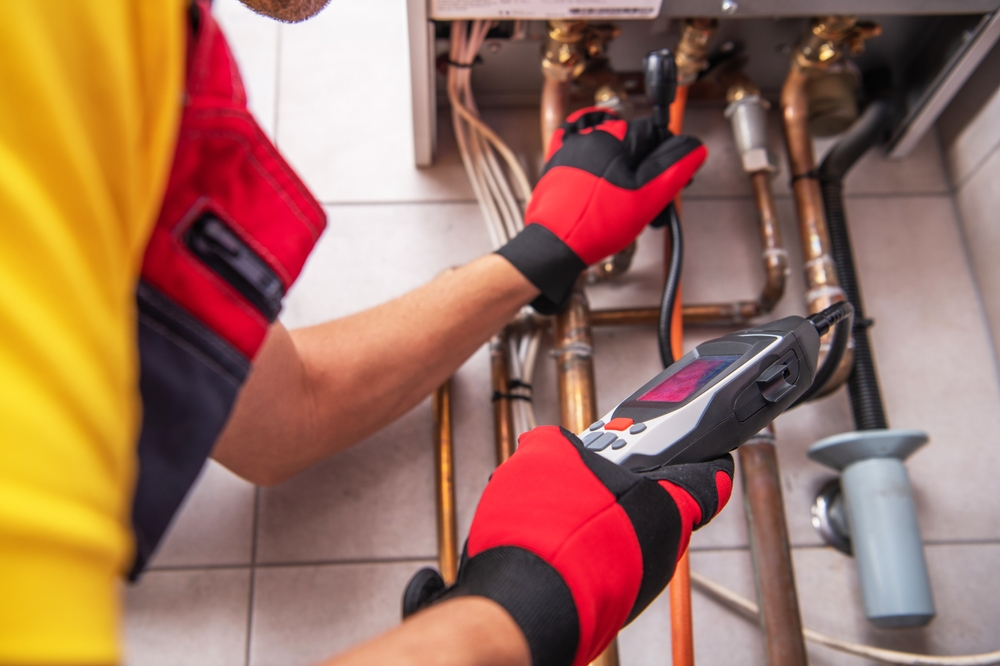
An LCA-accredited engineer visits your property and checks the key parts of the water system, including taps, showers, pipework, and more to confirm whether your water system is supporting safe day-to-day use.
Step 2: We identify risk points and what to do next
We look for common factors that can increase risk, such as stagnant water, infrequently used outlets, and “dead legs” in pipework. You’ll then get practical actions based on what we find, so you know what to address and why.
Step 3: You receive an audit-ready report within 24 hours
Within 24 hours of the assessment, you receive a digital PDF report via ServiceTracker. It summarises the findings, gives a clear risk rating for the property, and lists recommendations in priority order so you can keep a clean compliance record.
Speak to a Legionella risk assessment specialist
Need a landlord Legionella risk assessment to show you’re meeting your legal responsibilities? We make it simple, with clear pricing and fast turnaround.
An LCA-accredited assessor completes your site visit and issues a digital report within 24 hours via ServiceTracker, with prioritised actions for your records.
Legionella risk assessments for HMOs and residential properties
For landlords, Legionella risk varies depending on the type of rental property you own. No matter if you manage a single residential let or a larger HMO portfolio, our Legionella risk assessments for landlords help you demonstrate that all risks have been properly considered and controlled in line with ACoP L8 best practice.

Risk assessments for standard buy-to-let properties
Most of these property types have simple domestic hot and cold-water systems, like a combi boiler. These are lower risk, as water runs through them every day, stopping it from sitting still in the pipes and stagnating. We assess the key controls that you have in place, including:
- Hot and cold-water temperatures
- Regular use of all outlets (e.g. taps, showers, etc.)
- Identifying less-used outlets (e.g. spare bathrooms, utility/outdoor taps)
- Seeing if pipes are arranged in a way that reduces the chance of stagnation

Risk assessments for Houses of Multiple Occupancy (HMOs)
These often need a more detailed, property-specific approach. Multiple bathrooms, longer pipe runs, and different occupancy patterns throughout the year can all increase risk if not clearly managed. Because of this, our HMO assessment looks beyond basic checks, and into:
- Shared occupancy
- Empty rooms
- Risk oversight responsibility
- Maintenance history
- Local authority HMO regulation expectations
How often should a landlord Legionella risk assessment be carried out?
When it comes to how often landlords should do a Legionella risk assessment, there is no fixed date or timeframe set in law. Instead, assessments must be reviewed regularly (typically every 2 years) OR when there is a change that could affect risk, including:
- A change of tenancy
- Alterations to the water system (e.g. new bathroom or pipework)
- Extended vacancy periods where water use is reduced
This provides the most clear, auditable timespan in line with HSE expectations and landlord best practice. Regular assessment avoids gaps in compliance that could affect your position under audit scrutiny.
What our clients say

K
"Your technician was very polite and well mannered, he even made time to have a quick chat which is a surprise for me as most people who work on your home are just there to get job done and go 10/10!"
Keighley Boyes

N
"Excellent Service thanks for attending so promptly and dealing with the problem and taking into consideration the complex needs of the situation."
Natalie Hatzer

Speak to an accredited water hygiene specialist
Need a Legionella risk assessment to show you’re compliant with landlord responsibilities?
With our experienced, LCA-accredited engineers, you’ll be on your way to Legionella compliance in no time.
Call us today or book your free consultation to get started.
"*" indicates required fields