



Legionella Regulations & Legal Compliance
Know where you stand with UK Legionella regulations under ACoP L8 and HSG 274. Our structured water hygiene approach helps duty holders protect occupants and their legal position. Book your free consultation today to build inspection-ready evidence and demonstrate compliance.

Our accreditations



Am I compliant with Legionella regulations?
You’re compliant with Legionella regulations if you can demonstrate ongoing control of risk in your building. That means having the right assessments, controls, monitoring, and records in place. If you are an employer, landlord, or are responsible for your building, UK law places a clear statutory duty on you to identify, assess, and control the risk of Legionella bacteria.
Under the Health & Safety at Work Act 1974 and COSHH (Control of Substances Hazardous to Health), this responsibility is with the duty holder and cannot be delegated elsewhere – even if day-to-day tasks are outsourced.
Legionella compliance is not optional. Nor is it done by a one-off risk assessment. If you’re a duty holder, you must be able to demonstrate ongoing control through:
- A suitable and sufficient Legionella risk assessment
- A documented Written Scheme of Control
- Regular water hygiene monitoring
- Accurate records in line with ACoP L8 and HSG 274
If you can’t demonstrate to inspectors or auditors how Legionella risks are being managed, reviewed, and evidenced, you are not compliant with the law, and you could be fined or prosecuted.
Why choose Acorn Environment Services for your Legionella regulations compliance?
Our fully accredited water hygiene specialists have over 30 years’ experience helping duty holders demonstrate compliance with Legionella regulations. Here’s how:
Compliance that you can evidence
As members of the Legionella Control Association (LCA), working within an ISO 9001-certified quality management system, we provide independent assurance that our processes, reporting, and delivery meet recognised industry and compliance standards.
Trusted across 500+ UK locations
Over 500 sites across the UK have benefited from our help, supporting employers, landlords, and facilities teams with complex water systems and high regulatory exposure. Our engineers understand ACoP L8 and HSG 274 and apply them in practice.
Audit-ready reports when you need them most
Get real-time access to risk assessments, monitoring records, sampling results, and more. Every task is logged, time-stamped, and retained as evidence for instant visibility and confidence that your Legionella compliance is always inspection-ready.
Book your free compliance consultation
If you need to demonstrate Legionella compliance in your building, start today with Acorn. Get in touch for next steps on how to align with ACoP L8 and HSG 274 regulations. Whether you’re planning routine monitoring or responding to a health and safety concern, we’ll check your water system at a time that best suits you.

How do we help you stay compliant with ACoP L8?
We help you stay compliant with ACoP L8 regulations through a structured Legionella management service that identifies risk and applies the best control measures. Each service below forms part of a single, continuous Written Scheme of Control to keep your water systems safe and inspection-ready.

Step 1: Inspect your water system & establish a baseline
A Legionella risk assessment is the legal starting point for compliance. Our assessments are carried out by engineers accredited by the LCA (Legionella Control Association) in line with BS 8580-1:2019. Each assessment includes:
– A full site inspection of hot and cold water systems
– System schematics identifying storage, distribution, and risk points
– A prioritised action plan based on risk and exposure
– Defined review triggers where systems, usage, and occupancy change
– Direct integration into your Written Scheme of Control
Step 2: Analyse & verify water samples
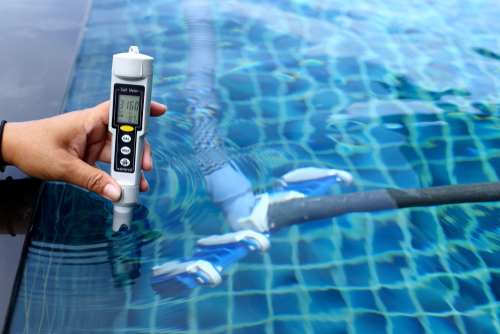
Once we’ve assessed your system, we confirm your control measures are working through routine checks and targeted sampling where appropriate. This gives you evidence you can rely on during inspection and audits. We chill and transport our samples on the same day they’re taken to a UKAS-certified laboratory – to make sure they meet HSG 274 expectations and withstand external scrutiny.

Step 3: Fix & sign off any issues
If any risks or failures are identified from the assessment or samples, corrective actions must be taken to fix them. These are then verified, documented, and formally signed off to evidence your compliance. This can include:
– Removing dead legs and redundant pipework to remove stagnation risk
– Inspecting, cleaning, and disinfecting cold water storage tanks
– Disinfecting and chlorinating your water system
– Servicing, fail-safe testing, or replacing TMVs (thermostatic mixing valves)
– Cleaning equipment (e.g., showerheads, spray outlets, TMVs)
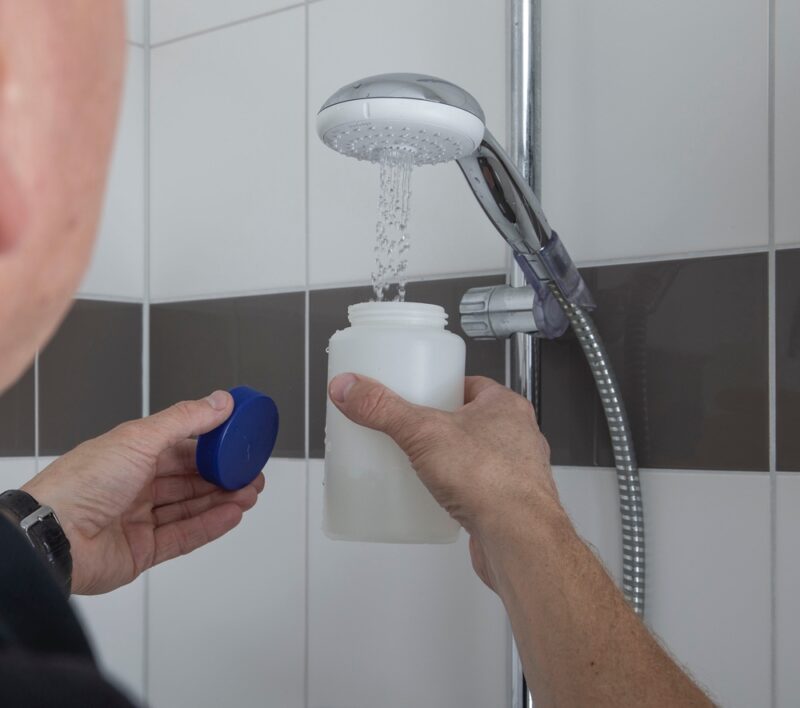
Step 4: Keep you inspection-ready for the long-term
To demonstrate ongoing control, you need consistent monthly checks and records across your system. This includes:
– Checking hot and cold outlets
– Servicing thermostatic mixing valves (TMV) and testing failsafes
– Regularly flushing infrequently used outlets
– Cleaning and descaling showerheads
– Inspecting coldwater storage tanks
What are the main Legionella regulations in the UK?
There are several Legionella regulations in the UK for duty holders to follow. Due to how inspectors assess compliance, these should be understood and tackled in combination with each other, instead of individually:

Health and Safety at Work Act 1974 (Legionella regulations)
The Health and Safety at Work Act 1974 is the main piece of legislation to consider. It places a legal duty on employers and those in control of a building to ensure the health and safety of its occupants – including reducing the risk of Legionella. Failure to control these risks can result in fines and prosecution.
What it means for you: If you’re responsible for the building, you must keep people safe. If someone is exposed to Legionella because risks weren’t properly controlled, you can be held responsible.
COSHH Regulations 2002
Under COSHH, Legionella bacteria are classified as a hazardous biological agent. These regulations require duty holders to do the following as it relates to Legionella:
– Assess the risk of exposure
– Implement control measures
– Support monitoring, training, and record-keeping
What it means for you: You must treat Legionella as a harmful hazard. You need to assess where it could grow, put control measures in place, and keep records that show those controls are being carried out.

ACoP L8 Legionella regulations (Approved Code of Practice)
ACoP L8 is the HSE’s (Health and Safety Executive) legally recognised code for controlling Legionella bacteria in water systems. It defines the key responsibilities of the duty holder, including:
– Appointing a Responsible Person
– Organising a Legionella risk assessment
– Getting a documented Written Scheme of Control
What it means for you: This sets out what “good practice” looks like. You should appoint a Responsible Person, get a suitable risk assessment, and keep a Written Scheme of Control that shows who does what, how it’s done, and how it’s recorded.
HSG 274 (Parts 1, 2 & 3)
HSG 274 offers technical guidance that supports ACoP L8, explaining how control measures should be applied in practice across different system types:
Part 1: Cooling towers and evaporative condensers
Part 2: Hot and cold water systems
Part 3: Other risk systems, such as spa pools
What it means for you: This is the practical guidance that explains how to carry out the checks and control measures. It sets expectations for monitoring, cleaning, testing, and record-keeping for different water system types.
Legionella compliance FAQs
What are the Legionella regulations?
Is Legionella testing a legal requirement in the UK?
What is L8 compliance?
How often should a Legionella risk assessment be done legally?
Speak to an accredited water hygiene specialist today
Need Legionella testing services? Get in touch now, and we’ll arrange a site visit.
With our experienced, LCA-accredited engineers, you’ll be ready for inspection in no time.
Call us today or book your free consultation to get started.
"*" indicates required fields