



Legionella testing services
Demonstrate clear water safety compliance with ACoP L8 and HSG 274 through Acorn’s Legionella testing services. We manage the entire process – from sampling to UKAS-accredited laboratory analysis and reporting. If you’re a duty holder, you’ll get all the evidence you need to stay audit-ready.

Our accreditations



Why Legionella testing is needed for your building
Legionella testing is needed because Legionella bacteria can develop in poorly managed water systems. If temperature, water flow, or maintenance is left unchecked, this can increase the risk of Legionnaires’ disease, a form of pneumonia that is especially dangerous to older or vulnerable individuals.
Under ACoP L8 and HSG 274, duty holders have a legal responsibility to manage and monitor Legionella risk. Testing helps verify that you’re taking reasonable steps to protect people who use or visit your building.
Legionella testing is also important for compliance. Insurers and auditors often expect clear evidence that water hygiene is being properly managed, and Legionella testing provides this.
Who needs Legionella testing?
Any organisation responsible for a water system may need Legionella testing to meet legal obligations and protect occupants or guests, including:
- Healthcare & care homes: Occupants are often elderly or recovering from illness, so any water hygiene failures can have serious consequences.
- Hospitality & leisure: Hotels, gyms, and spas expose hundreds of guests to their water systems, so Legionella testing helps to control this public health risk.
- Commercial buildings: Legionella testing shows that the water system connected to multiple tenants and deparatments is still being managed.
- Landlords & property managers: To demonstrate all reasonable steps have been taken to protect tenants and keep people safe from illness.
- Education: Testing helps to see if your water system has gone stagnant from low occupancy over summer break, helping you safeguard students.

What is Legionella testing?
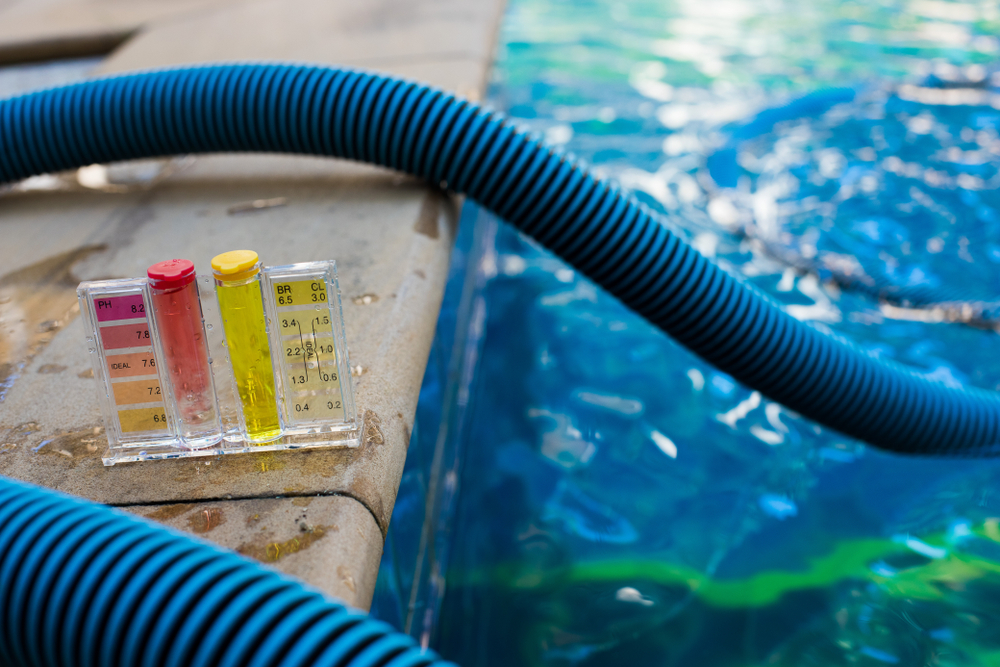
Legionella testing is the process of taking water samples from key points within a building’s water system and analysing them to check for the presence of Legionella bacteria. It verifies whether your water hygiene controls work as intended.
As well as protecting public health by looking for harmful levels of bacteria, testing also offers legal evidence that a duty holder has taken reasonable steps to manage the risk of Legionella under ACoP L8 and HSG 274.
Results should always be reviewed alongside a Legionella risk assessment, any existing monitoring records, and any recent changes to the water system. This allows potential issues to be identified early, addressed properly, and clearly recorded.



Why choose us for Legionella testing services?

Clear compliance you can rely on
Your Legionella testing is carried out in line with ACoP L8 and HSG 274 and analysed by UKAS-accredited labs, giving you clear evidence that risks are being properly assessed and controlled if insurers, auditors, or authorities ask.

25+ years of water hygiene expertise
All Legionella water testing is carried out by trained engineers with over 25 years’ experience in water hygiene, accredited by the Legionella Control Association (LCA).

Audit-ready reports when you need
Your results and documentation are stored securely in a digital client portal, giving you instant access to Legionella compliance evidence for audits, inspections, or internal checks.

Fast, local support across the North
You get responsive Legionella testing across the North West and Yorkshire, with quick turnaround on sampling and paperwork when issues need dealing with quickly
What is our Legionella testing process?
From sampling to reporting, our Legionella testing process gives you everything you need to get compliant with UK regulations.
Sampling & analysis
We start with a quick consultation to understand your water system, site use, and why testing is needed. Our engineers then select the most representative outlets and collect samples using sterile methods to minimise contamination and reflect conditions at the time of testing.
Compliance-focused testing
Samples are preserved and transported same day to UKAS-accredited laboratories for analysis. This includes culture testing (and qPCR where specified). Testing is aligned to ACoP L8 and HSG 274, supporting routine monitoring, incident response, and verification after system changes or remedial works.
Clear digital reporting
You’ll receive an audit-ready report through your online portal, with clear results, pass/fail status and prioritised actions. Our reporting supports HSE and insurer expectations, with a clear compliance trail and recommended next steps, including follow-up sampling and practical guidance where issues are identified.
Book your free Legionella testing consultation
If you need reliable Legionella testing, start today with Acorn. Get in touch for next steps on how to get compliant with ACoP L8 and HSG 274 regulations. Whether you’re planning routine monitoring or responding to a health and safety concern, we’ll check your water system at a time that best suits you.

What’s the difference between full Legionella testing vs self-testing kits?
Professional Legionella testing and self-testing kits both have a place, but they serve very different needs and risk profiles.
Full Legionella testing
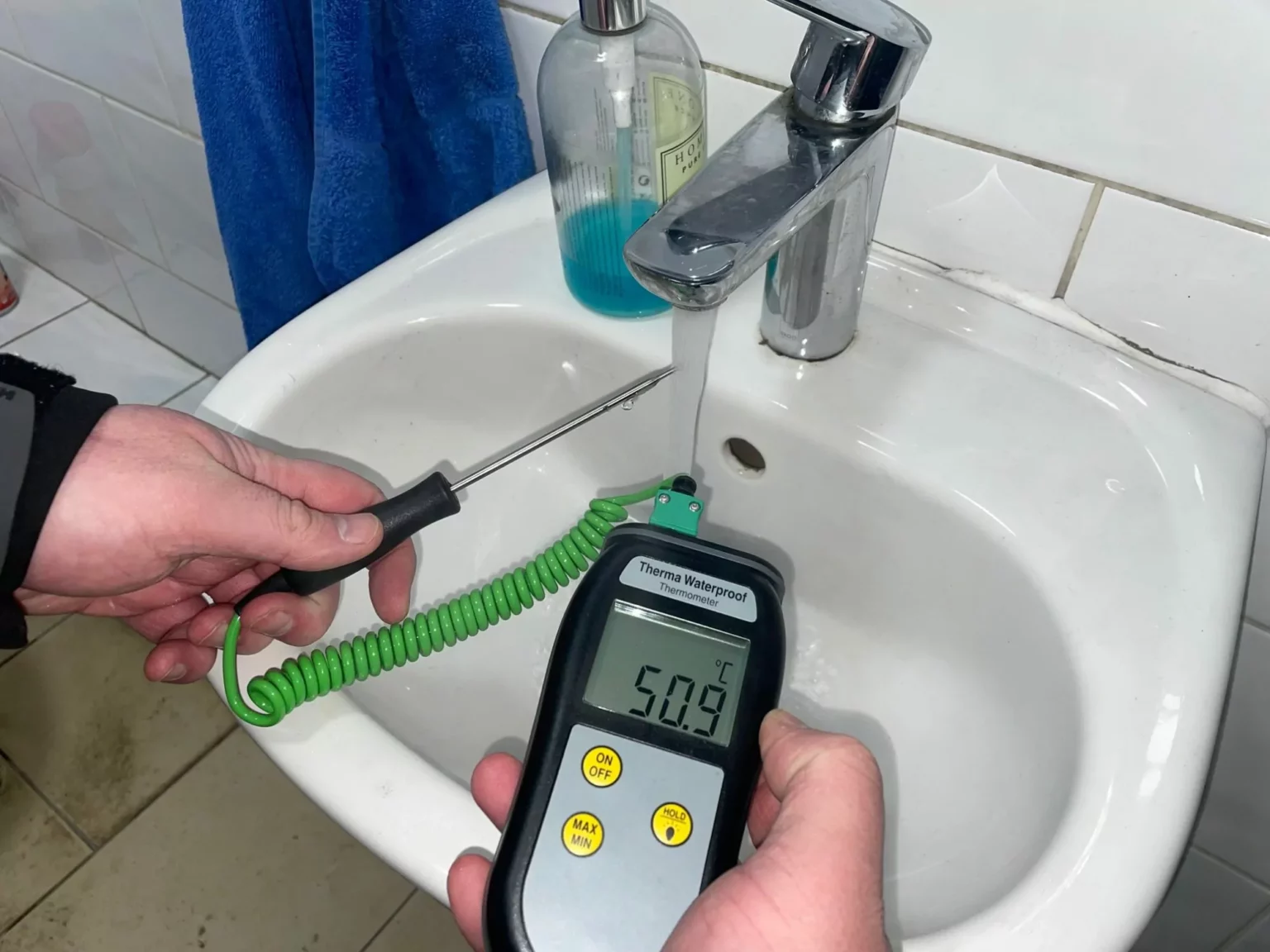
A full Legionella test done by a professional team provides end-to-end assurance and is needed for legal obligations.
- Representative sampling locations are chosen throughout the buildings (e.g., cold water storage tanks, dead-end sections of pipework, higher risk areas, etc.)
- Water samples are taken under more controlled conditions with calibrated equipment designed specifically for the task.
- UKAS-accredited laboratories carry out the analysis for more reliable, verifiable results that stand up better to audit scrutiny.
- Follow-up advice or action can be immediately arranged if any areas of concern come up.
- Best used when: You manage a higher-risk site, have public or vulnerable occupants, need defensible results for insurers or auditors, or require clear evidence of compliance.

Legionella self-testing kits
Legionella self-testing kits can work for lower-risk sites or where a detailed Legionella risk assessment is already in place.
- Kits may offer quicker access to water samples without needing to arrange a site visit.
- Responsibility for correct sampling, handling, and interpretation of results sits with the duty holder, which may not always meet insurer or auditor expectations
- Doesn’t provide follow-up action or advice for next steps if you spot potential signs of Legionella – you’ll still need to work with a professional team to clean out your water system.
- Best used when: The site is low risk, a recent Legionella risk assessment is in place, and testing is being used as an additional check rather than primary evidence.
What are the industry standards for Legionella compliance?
A small number of industry standards set out how duty holders should manage Legionella risk.
-

ACoP L8
Issued by the Health & Safety Executive, this Approved Code of Practice requires duty holders to assess, manage, and control the risk of Legionella in water systems. Testing is one of the recognised ways to verify that these controls are working as intended.
-

HSG 274
HSG 274 (Parts 1–3) provides guidance on applying control measures across systems from cold-water tanks and showers to humidifiers and hydrotherapy pools. It also confirms Legionella testing frequency must reflect risk factors and the risk assessment.
-

COSHH
COSHH requires employers to prevent or adequately control exposure to ‘hazardous substances’, including Legionella. Accurate testing helps to demonstrate to auditors that reasonable steps are being taken to protect occupants, staff, and visitors.
View our client testimonials

A
"Really grateful to Demi and the team for assisting at such short notice. Prompt service which ran smoothly. Highly recommend!"
Arielle Halter

K
"Your technician was very polite and well mannered, he even made time to have a quick chat which is a surprise for me as most people who work on your home are just there to get job done and go 10/10!"
Keighley Boyes
N
"Excellent Service thanks for attending so promptly and dealing with the problem and taking into consideration the complex needs of the situation."
Natalie Hatzer

Legionella testing FAQs
What is Legionella testing?
How often should Legionella testing be carried out?
Who is responsible for arranging Legionella testing?
What happens if Legionella is detected?
Are DIY Legionella test kits suitable?
Speak to an accredited water hygiene specialist today
Need Legionella testing services? Get in touch now, and we’ll arrange a site visit.
With our experienced, LCA-accredited engineers, you’ll be ready for inspection in no time.
Call us today or book your free consultation to get started.
"*" indicates required fields